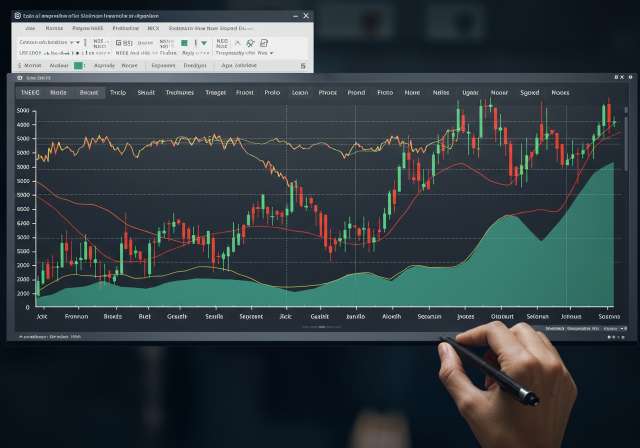
Unveiling the Nifty 50: India’s benchmark index. Learn about its composition, performance, and how it impacts your investments in the Indian stock market. Disco
Unveiling the nifty 50: India’s benchmark index. Learn about its composition, performance, and how it impacts your investments in the Indian stock market. Discover how to invest wisely!
Decoding the Nifty 50: Your Guide to India’s Stock Market Barometer
Introduction: Navigating the Indian Equity Landscape
The Indian stock market, a vibrant and dynamic ecosystem, offers a plethora of opportunities for investors seeking to grow their wealth. However, understanding its intricacies can feel overwhelming, especially for newcomers. At the heart of this market lies a crucial indicator: the Nifty 50. Consider it a snapshot of the Indian economy, reflecting the performance of the nation’s leading companies.
Think of the market as a vast ocean. Individual stocks are like smaller boats sailing on it, some rising high, others struggling. The Nifty 50, however, is more like a weather buoy, giving you an overall sense of the ocean’s conditions – whether the market is generally calm (bullish), turbulent (bearish), or somewhere in between. This article aims to demystify the Nifty 50, providing you with a comprehensive understanding of its role, composition, and significance in the Indian financial landscape.
What Exactly is the Nifty 50?
The Nifty 50, short for National Fifty, is a flagship index of the National Stock Exchange (NSE) of India. It represents the weighted average of the top 50 publicly listed companies on the NSE, selected based on their free-float market capitalization. These 50 companies represent approximately 65% of the NSE’s free float market capitalization, making the index a highly representative gauge of the overall market sentiment.
Essentially, the Nifty 50 serves as a benchmark. Investors and analysts use it to:
- Gauge Market Performance: Track the overall direction and health of the Indian stock market.
- Compare Investment Returns: Evaluate the performance of individual stocks or mutual funds against a widely recognized benchmark.
- Create Investment Products: Serve as the basis for index funds, exchange-traded funds (ETFs), and other investment vehicles.
The index is maintained by NSE Indices Limited (formerly known as India Index Services & Products Limited – IISL), a subsidiary of the NSE. They are responsible for its calculation, monitoring, and periodic rebalancing.
Understanding the Nifty 50 Calculation Methodology
The Nifty 50 is calculated using the free-float market capitalization-weighted method. Let’s break this down:
Free-Float Market Capitalization
This refers to the market value of shares readily available for trading in the market. It excludes promoter holdings, government holdings, and other shares considered “locked-in.” The formula is:
Free-Float Market Capitalization = (Shares Outstanding – Locked-In Shares) Share Price
Weighting
Each company in the Nifty 50 is assigned a weight based on its free-float market capitalization. Companies with larger free-float market capitalization have a higher weight in the index. This means their price movements have a greater impact on the overall index value.
Index Value Calculation
The index value is calculated in real-time throughout the trading day, reflecting the fluctuating prices of its constituent stocks. A base capital and base index value are used as starting points for the calculation.
While the specific formula is complex, the key takeaway is that the index reflects the combined performance of its 50 constituents, weighted according to their market importance.
Who are the Companies in the Nifty 50?
The composition of the Nifty 50 is not static. It is reviewed and rebalanced periodically (typically semi-annually) by NSE Indices Limited. This ensures the index remains representative of the largest and most liquid companies on the NSE.
As of the latest review (dates may vary), the Nifty 50 typically includes companies from diverse sectors such as:
- Financial Services: HDFC Bank, ICICI Bank, State Bank of India (SBI), Bajaj Finance
- Information Technology: Infosys, Tata Consultancy Services (TCS), HCL Technologies
- Energy: Reliance Industries, Indian Oil Corporation (IOC)
- Consumer Goods: Hindustan Unilever, ITC, Nestle India
- Automobile: Maruti Suzuki, Mahindra & Mahindra
- Pharmaceuticals: Dr. Reddy’s Laboratories, Sun Pharmaceutical Industries
- Metals: Tata Steel, JSW Steel
This is not an exhaustive list, and the exact composition can change. You can find the most up-to-date list on the NSE India website.
Why is the Nifty 50 Important for Indian Investors?
The Nifty 50 holds significant importance for both seasoned and novice investors in the Indian market:
- Benchmark for Performance Evaluation: It allows investors to assess the performance of their portfolios. If your portfolio is underperforming the Nifty 50, it might indicate a need to re-evaluate your investment strategy.
- Foundation for Index Funds and ETFs: Many mutual funds and ETFs are designed to replicate the performance of the Nifty 50. These funds offer a diversified way to invest in the top 50 companies without having to buy each stock individually. Investing in Nifty 50 index funds and ETFs is a passive investment strategy, ideal for those seeking market-linked returns with lower expenses.
- Economic Indicator: The Nifty 50 provides a broad indication of the health and direction of the Indian economy. A rising Nifty 50 often suggests positive economic sentiment, while a falling index may signal concerns.
- Accessibility to Market Participation: Investing in Nifty 50 based products, particularly ETFs and Index Funds, makes participation in the broader market accessible even to investors with limited capital. You can start with small Systematic Investment Plans (SIPs) in these instruments.
Investing in the Nifty 50: Different Avenues
There are several ways to gain exposure to the Nifty 50:
Nifty 50 Index Funds
These are mutual funds that aim to replicate the composition and performance of the Nifty 50. The fund manager invests in the same stocks and in the same proportion as the index. The goal is to mirror the index’s returns (minus expenses).
Nifty 50 Exchange-Traded Funds (ETFs)
ETFs are similar to index funds but are traded on the stock exchange like individual stocks. They offer intraday liquidity and can be bought and sold throughout the trading day. The expense ratios of ETFs are generally lower than those of index funds.
Direct Stock Investment
You can also invest directly in the individual companies that make up the Nifty 50. This requires more research and active management but allows you to tailor your portfolio to your specific preferences.
Derivatives: Futures and Options
The Nifty 50 is also available for trading in the derivatives market, including futures and options. These are leveraged instruments that allow you to speculate on the future direction of the index. However, derivatives trading is inherently risky and requires a thorough understanding of the market.
Factors Influencing the Nifty 50
The performance of the Nifty 50 is influenced by a multitude of factors, both domestic and global:
- Economic Growth: India’s GDP growth, industrial production, and inflation rates significantly impact the index.
- Corporate Earnings: The financial performance of the companies within the Nifty 50 directly affects its value. Strong earnings generally lead to higher stock prices and a rising index.
- Government Policies: Fiscal and monetary policies, regulatory changes, and infrastructure development initiatives can all have a positive or negative impact.
- Global Events: International economic conditions, geopolitical tensions, and commodity price fluctuations can influence investor sentiment and market performance.
- Interest Rate Movements: Changes in interest rates by the Reserve Bank of India (RBI) can impact borrowing costs for companies and influence investor decisions.
- Foreign Institutional Investor (FII) Flows: The inflow and outflow of funds from FIIs can significantly impact the demand and supply of Indian stocks.
The Nifty 50 vs. Other Indices
While the Nifty 50 is a key indicator, it’s not the only index in the Indian stock market. Other important indices include:
- BSE Sensex: The Sensex, managed by the Bombay Stock Exchange (BSE), tracks the performance of the top 30 companies on the BSE. It is another widely followed benchmark index.
- Nifty Bank: This index focuses specifically on the banking sector, tracking the performance of the most liquid and large banking stocks listed on the NSE.
- Nifty IT: This index tracks the performance of information technology companies listed on the NSE.
- Nifty Midcap 100 and Nifty Smallcap 100: These indices track the performance of mid-sized and small-sized companies, respectively.
Each index provides a different perspective on the market. The BSE Sensex and the Nifty 50 are both broad market indices, but the Sensex includes only 30 companies compared to the Nifty 50’s 50. This means the Nifty 50 might offer slightly better diversification.
Risk Factors to Consider
Investing in the Nifty 50, whether through index funds, ETFs, or direct stock investment, involves inherent risks:
- Market Risk: The value of your investment can fluctuate based on market conditions.
- Concentration Risk: Although the Nifty 50 is diversified, it is still concentrated in the top 50 companies. Certain sectors might have a higher weightage, exposing you to sector-specific risks.
- Tracking Error (for Index Funds and ETFs): Index funds and ETFs may not perfectly replicate the performance of the Nifty 50 due to expenses, fund management techniques, and other factors. This difference in performance is known as tracking error.
- Economic and Political Risk: Changes in economic policies, political instability, and global events can affect the overall market and the Nifty 50.
Conclusion: Leveraging the Nifty 50 for Informed Investing
The Nifty 50 is an indispensable tool for understanding and navigating the Indian stock market. By comprehending its composition, calculation methodology, and the factors that influence it, investors can make more informed decisions. Whether you choose to invest directly in the constituent stocks, opt for index funds or ETFs, or simply use the index as a benchmark, the Nifty 50 provides valuable insights into the health and direction of the Indian economy. Remember to conduct thorough research, understand your risk tolerance, and consult with a financial advisor before making any investment decisions. Consider your overall investment goals, time horizon, and risk appetite before allocating funds to the market. Also, remember to explore other investment options like Public Provident Fund (PPF), National Pension Scheme (NPS), and Equity Linked Savings Schemes (ELSS) for tax-saving benefits, and diversify your investment portfolio accordingly. With a well-informed approach, you can leverage the power of the Indian stock market, guided by the reliable compass that is the Nifty 50.