Tag: invest in stocks

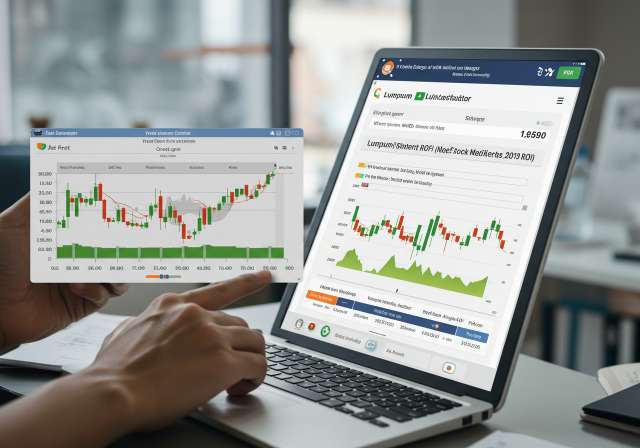
  • Robinhood Stock Broker: Is Zero-Commission Trading Right for India?

    Robinhood Stock Broker: Is Zero-Commission Trading Right for India?

    Is a zero-commission brokerage really possible in India? Uncover the pros and cons of the Robinhood stock broker model and explore alternatives for Indian inves

    Is a zero-commission brokerage really possible in India? Uncover the pros and cons of the robinhood stock broker model and explore alternatives for Indian investors. Discover safer investment strategies today!

    Robinhood Stock Broker: Is Zero-Commission Trading Right for India?

    The Allure of Zero-Commission Trading

    The promise of commission-free trading has been a disruptive force in the financial markets, largely thanks to companies like Robinhood in the US. The idea of buying and selling stocks without incurring brokerage fees is undeniably attractive, especially to new investors entering the equity markets. The allure is simple: more of your money goes directly into your investments, potentially boosting returns over time. But, is this model sustainable and, more importantly, is it suitable for the Indian investor?

    Understanding the Robinhood Model

    Robinhood’s success is rooted in a few key factors. First, it offers a sleek, user-friendly mobile app that simplifies the trading process, making it accessible to a younger, tech-savvy demographic. Second, and perhaps most significantly, it popularized zero-commission trading. While it appears that trading is free, the company generates revenue through various means, including:

    • Payment for Order Flow (PFOF): This involves routing trades to market makers who pay Robinhood a small fee for the order flow. This is a controversial practice as it can potentially lead to less favorable prices for investors.
    • Margin Lending: Offering margin accounts allows Robinhood to charge interest on borrowed funds.
    • Subscription Services: Premium features and services, such as access to research and data, are offered through paid subscriptions.
    • Securities Lending: Loaning out securities held in customer accounts to other financial institutions.

    While the zero-commission aspect is appealing, it’s crucial to understand these underlying revenue streams and their potential impact on the quality of trade execution.

    The Indian Brokerage Landscape: A Different Playing Field

    The Indian brokerage industry is governed by the Securities and Exchange Board of India (SEBI), which regulates market participants to ensure fair practices and protect investor interests. While zero-commission trading has gained traction globally, the Indian context presents a different set of challenges and opportunities. Many Indian brokers have already significantly reduced brokerage fees, making the cost of trading relatively low.

    Several established Indian brokers offer competitive brokerage rates, often structured as:

    • Discount Brokers: These brokers offer minimal services beyond trade execution, focusing on low-cost trading. They typically charge a fixed fee per trade, regardless of the trade value.
    • Full-Service Brokers: These brokers provide a wider range of services, including research reports, advisory services, and personalized support. They often charge a percentage-based brokerage fee.

    Examples of popular discount brokers in India include Zerodha, Upstox, and Groww. These platforms have democratized access to the Indian stock market, allowing investors to participate with smaller capital and lower trading costs.

    Is Zero-Commission Trading Sustainable in India?

    The sustainability of a pure zero-commission model in India is questionable, primarily due to regulatory constraints and market dynamics. SEBI has expressed concerns about the potential conflicts of interest associated with PFOF and has been exploring alternative models for compensating brokers.

    Furthermore, the Indian market differs from the US market in terms of investor behavior and trading volume. The reliance on PFOF as a primary revenue source may not be as profitable in India, given the relatively lower trading volumes compared to the US. This could lead to compromises in trade execution quality or the introduction of hidden fees, ultimately negating the benefits of zero-commission trading.

    Potential Risks and Drawbacks

    While the allure of zero-commission trading is strong, it’s crucial to consider the potential risks:

    • Lower Quality Trade Execution: Reliance on PFOF can lead to trades being routed to market makers who may not offer the best prices, potentially resulting in slippage and reduced returns.
    • Increased Trading Frequency: The absence of brokerage fees can encourage impulsive trading and speculation, which can be detrimental to long-term investment goals.
    • Limited Research and Support: Zero-commission brokers often offer minimal research and advisory services, leaving investors to make decisions without adequate information.
    • Hidden Fees and Charges: While the brokerage fee may be zero, other charges, such as account maintenance fees, regulatory charges, and transaction taxes, may still apply.

    Alternatives for Indian Investors

    Instead of focusing solely on zero-commission trading, Indian investors should prioritize a holistic approach to investing, considering factors such as investment goals, risk tolerance, and financial expertise. Several alternatives offer a more sustainable and potentially more rewarding investment experience:

    • Discount Brokers with Low Fees: Choose a discount broker that offers competitive brokerage rates and reliable trade execution. Compare brokerage plans and consider factors such as platform stability, customer support, and research tools.
    • Direct Mutual Fund Investments: Investing directly in mutual funds through the AMC (Asset Management Company) eliminates distributor commissions, potentially increasing returns. Consider investing in both equity and debt mutual funds based on your risk appetite. SIPs (Systematic Investment Plans) are an excellent way to invest regularly in mutual funds.
    • Exchange Traded Funds (ETFs): ETFs are passively managed investment funds that track a specific index, such as the Nifty 50 or Sensex. They offer diversification and low expense ratios.
    • Long-Term Investing in Blue-Chip Stocks: Investing in well-established, financially sound companies listed on the NSE (National Stock Exchange) or BSE (Bombay Stock Exchange) can provide long-term capital appreciation.
    • Public Provident Fund (PPF): The PPF is a government-backed savings scheme offering tax benefits and guaranteed returns. It’s a safe and reliable investment option for long-term financial goals.
    • National Pension System (NPS): The NPS is a retirement savings scheme that allows investors to contribute regularly and build a retirement corpus. It offers tax benefits and investment options across equity, debt, and government securities.
    • Equity Linked Savings Scheme (ELSS): ELSS funds are equity mutual funds that offer tax benefits under Section 80C of the Income Tax Act. They are a good option for investors looking to save on taxes while investing in equities.

    Choosing the Right Investment Strategy

    The optimal investment strategy depends on individual circumstances and financial goals. Before making any investment decisions, consider the following:

    • Define Your Investment Goals: What are you saving for? (e.g., retirement, education, down payment on a house).
    • Assess Your Risk Tolerance: How comfortable are you with the possibility of losing money?
    • Diversify Your Portfolio: Don’t put all your eggs in one basket. Spread your investments across different asset classes and sectors.
    • Do Your Research: Understand the risks and potential rewards of each investment before investing.
    • Seek Professional Advice: If you’re unsure about where to start, consult a qualified financial advisor.

    Conclusion: The Indian Investor’s Perspective

    While the concept of a robinhood stock broker and zero-commission trading is attractive, Indian investors should approach it with caution. The current Indian brokerage landscape offers competitive low-cost options, and regulatory concerns surrounding PFOF make the sustainability of a pure zero-commission model uncertain. Instead of solely focusing on the absence of brokerage fees, prioritize factors such as trade execution quality, research and support, and a well-diversified investment portfolio. By adopting a holistic approach and choosing investment options that align with your financial goals and risk tolerance, you can build a successful and sustainable investment strategy in the Indian market.


  • Find Your Perfect Match: Choosing the Best Stock Broker in India

    Find Your Perfect Match: Choosing the Best Stock Broker in India

    Looking for the india best stock broker to navigate the Indian stock market? Compare brokerage fees, trading platforms, research tools, and account features to

    Looking for the india best stock broker to navigate the Indian stock market? Compare brokerage fees, trading platforms, research tools, and account features to find the perfect fit. Start investing wisely today!

    Find Your Perfect Match: Choosing the Best Stock Broker in India

    Introduction: Navigating the Indian Stock Market

    The Indian stock market offers exciting opportunities for wealth creation. With the Bombay Stock Exchange (BSE) and the National Stock Exchange (NSE) providing platforms for trading, understanding how to participate is crucial. A vital component of this participation is selecting the right stock broker. Your stock broker acts as your intermediary, facilitating your trades and providing access to market information and investment tools. But with so many options available, choosing the right one can feel overwhelming. This article will guide you through the process of selecting a stock broker in India, focusing on factors that matter most to both beginners and experienced investors.

    Understanding Your Investment Needs

    Before diving into comparing brokers, take a moment to assess your individual investment needs and goals. Ask yourself the following questions:

    • What is your investment style? Are you a long-term investor focused on value investing, or a short-term trader seeking quick profits?
    • What types of securities are you interested in trading? Equities (stocks), derivatives (futures and options), commodities, currency trading, or a combination?
    • What is your risk tolerance? Are you comfortable with high-risk, high-reward investments, or do you prefer a more conservative approach?
    • What is your budget for brokerage fees and other charges?
    • What level of support and research do you need? Are you a self-directed investor, or do you require assistance from a financial advisor?

    Answering these questions will help you narrow down your choices and identify brokers that align with your specific requirements.

    Key Factors to Consider When Choosing a Stock Broker

    Here are some crucial factors to evaluate when selecting a stock broker in India:

    Brokerage Fees and Charges

    Brokerage fees are the charges levied by the broker for executing trades. These fees can vary significantly between different brokers. Common types of brokerage charges include:

    • Percentage-based brokerage: A percentage of the transaction value.
    • Flat-fee brokerage: A fixed fee per trade, regardless of the transaction value.
    • Discount brokerage: Lower brokerage fees, often with limited services.
    • Full-service brokerage: Higher brokerage fees, but with access to research, advisory services, and personalized support.

    Pay close attention to other charges as well, such as account opening fees, annual maintenance charges (AMC), Demat account charges, transaction charges levied by the exchanges (NSE and BSE), SEBI turnover fees, and Goods and Services Tax (GST). Compare these charges carefully to understand the total cost of trading.

    Trading Platform and Technology

    The trading platform is your gateway to the stock market. A user-friendly and reliable platform is essential for efficient trading. Look for the following features:

    • Intuitive interface: Easy to navigate and understand.
    • Real-time market data: Up-to-date information on stock prices and market movements.
    • Charting tools: Technical analysis tools for identifying trading opportunities.
    • Order placement options: Various order types, such as market orders, limit orders, and stop-loss orders.
    • Mobile app: Ability to trade on the go from your smartphone or tablet.
    • Security: Robust security measures to protect your account and data.

    Many brokers offer demo accounts that allow you to test the platform before committing. Take advantage of these opportunities to evaluate the platform’s functionality and ease of use.

    Research and Analysis Tools

    Access to high-quality research and analysis can significantly improve your investment decisions. Look for brokers that provide:

    • Company reports: Detailed information on company financials, performance, and prospects.
    • Industry analysis: Insights into industry trends and competitive landscapes.
    • Stock recommendations: Buy, sell, and hold recommendations from analysts.
    • Technical analysis tools: Charts, indicators, and other tools for identifying trading patterns.
    • Educational resources: Articles, webinars, and other resources to help you learn about investing.

    The value of research and analysis depends on your investment style and experience. If you are a beginner, access to reliable research can be invaluable. Experienced investors may still benefit from independent research to supplement their own analysis.

    Customer Support and Service

    Reliable customer support is essential in case you encounter any issues or have questions about your account or trading. Look for brokers that offer:

    • Multiple channels of communication: Phone, email, and live chat.
    • Prompt and helpful responses: Quick resolution of your queries and issues.
    • Knowledgeable support staff: Ability to answer your questions accurately and efficiently.
    • Dedicated relationship manager: Personalized support from a designated representative (often available with full-service brokers).

    Check online reviews and ratings to gauge the quality of customer support provided by different brokers.

    Account Features and Offerings

    Consider the other account features and offerings provided by the broker, such as:

    • Demat account: Necessary for holding shares in electronic form.
    • Trading account: Used to execute trades.
    • Margin trading: Ability to borrow funds to trade (use with caution).
    • IPO access: Opportunity to apply for shares in initial public offerings (IPOs).
    • Mutual fund investments: Platform to invest in mutual funds, including SIPs and ELSS funds.
    • Currency trading: Opportunity to trade in currency derivatives.
    • Commodity trading: Opportunity to trade in commodity futures.

    Ensure that the broker offers the account features and investment options that you need.

    Regulatory Compliance and Security

    It is crucial to choose a broker that is regulated by the Securities and Exchange Board of India (SEBI) and adheres to all applicable regulations. This ensures that your funds and investments are protected. Check the broker’s SEBI registration number and verify its validity on the SEBI website. Also, look for brokers that have robust security measures in place to protect your account and data from cyber threats.

    Comparing Different Types of Stock Brokers in India

    Stock brokers in India can be broadly classified into the following categories:

    Full-Service Brokers

    Full-service brokers offer a wide range of services, including research, advisory, trading platform, and personalized support. They typically charge higher brokerage fees than discount brokers. Full-service brokers are suitable for investors who value personalized advice and require assistance with their investment decisions.

    Discount Brokers

    Discount brokers offer a basic trading platform and limited services at lower brokerage fees. They are suitable for self-directed investors who do not require extensive research or advisory services. Discount brokers often focus on providing a cost-effective trading experience.

    Online Brokers

    Online brokers operate primarily online and offer a convenient and efficient trading experience. They typically offer a user-friendly trading platform, access to research, and competitive brokerage fees. Online brokers are suitable for investors who are comfortable trading online and prefer a self-directed approach.

    The Role of Technology in Modern Broking

    Modern broking is heavily reliant on technology. Algorithmic trading, automated trading platforms, and sophisticated analytical tools are now commonplace. While selecting a stock broker, assess their technological capabilities and ensure that they offer a seamless and secure trading experience. Consider factors like platform stability, mobile app functionality, and the availability of advanced charting tools.

    Beyond Equity: Exploring Other Investment Avenues Through Your Broker

    Your stock broker isn’t just for equity trading. Most brokers offer access to a wide range of investment products, including:

    • Mutual Funds: Invest in diversified portfolios through Systematic Investment Plans (SIPs) or lump-sum investments. Consider Equity Linked Savings Schemes (ELSS) for tax benefits under Section 80C of the Income Tax Act.
    • Derivatives: Trade in futures and options to hedge your portfolio or speculate on market movements.
    • Initial Public Offerings (IPOs): Apply for new shares being offered by companies listing on the stock exchange.
    • Bonds and Debentures: Invest in fixed-income securities issued by corporations or the government.
    • Sovereign Gold Bonds (SGBs): Invest in gold without physical possession, earning interest and benefiting from price appreciation.

    Choosing a broker that offers a comprehensive suite of investment options allows you to diversify your portfolio and manage your risk effectively.

    Due Diligence: Checking Credentials and Reviews

    Before finalizing your choice, perform thorough due diligence. Verify the broker’s SEBI registration details and read online reviews from other investors. Check for any complaints or disciplinary actions against the broker. This step is crucial to ensure that you are dealing with a reputable and trustworthy firm.

    Tax Implications and Broker’s Role

    Understanding the tax implications of your investments is crucial. Capital gains tax, dividend tax, and other taxes apply to stock market investments. Your broker can provide you with statements and reports that will assist you in filing your tax returns. However, it’s always best to consult with a qualified tax advisor for personalized advice.

    Conclusion: Making an Informed Decision

    Choosing the right stock broker is a crucial step towards achieving your financial goals. By carefully considering your investment needs, comparing different brokers, and conducting thorough due diligence, you can find a broker that aligns with your requirements and helps you navigate the Indian stock market with confidence. Remember that investment decisions carry inherent risks, so it’s essential to invest wisely and consult with a financial advisor if needed. While this article provides information and guidance, the ultimate decision of choosing the india best stock broker rests with you, the investor.

  • Decoding the Nifty 50: Your Guide to India’s Stock Market Barometer

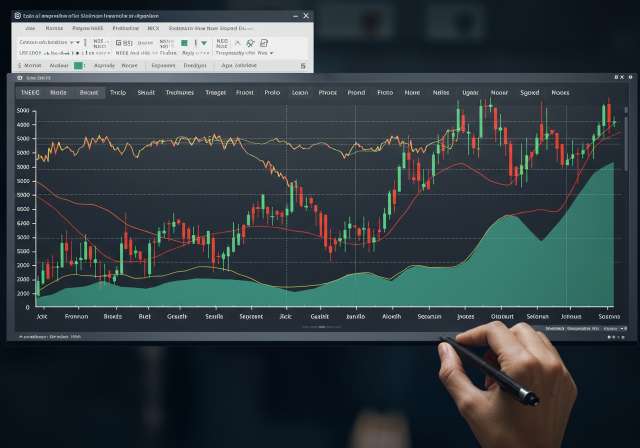
    Decoding the Nifty 50: Your Guide to India’s Stock Market Barometer

    Unveiling the Nifty 50: India’s benchmark index. Learn about its composition, performance, and how it impacts your investments in the Indian stock market. Disco

    Unveiling the nifty 50: India’s benchmark index. Learn about its composition, performance, and how it impacts your investments in the Indian stock market. Discover how to invest wisely!

    Decoding the Nifty 50: Your Guide to India’s Stock Market Barometer

    Introduction: Navigating the Indian Equity Landscape

    The Indian stock market, a vibrant and dynamic ecosystem, offers a plethora of opportunities for investors seeking to grow their wealth. However, understanding its intricacies can feel overwhelming, especially for newcomers. At the heart of this market lies a crucial indicator: the Nifty 50. Consider it a snapshot of the Indian economy, reflecting the performance of the nation’s leading companies.

    Think of the market as a vast ocean. Individual stocks are like smaller boats sailing on it, some rising high, others struggling. The Nifty 50, however, is more like a weather buoy, giving you an overall sense of the ocean’s conditions – whether the market is generally calm (bullish), turbulent (bearish), or somewhere in between. This article aims to demystify the Nifty 50, providing you with a comprehensive understanding of its role, composition, and significance in the Indian financial landscape.

    What Exactly is the Nifty 50?

    The Nifty 50, short for National Fifty, is a flagship index of the National Stock Exchange (NSE) of India. It represents the weighted average of the top 50 publicly listed companies on the NSE, selected based on their free-float market capitalization. These 50 companies represent approximately 65% of the NSE’s free float market capitalization, making the index a highly representative gauge of the overall market sentiment.

    Essentially, the Nifty 50 serves as a benchmark. Investors and analysts use it to:

    • Gauge Market Performance: Track the overall direction and health of the Indian stock market.
    • Compare Investment Returns: Evaluate the performance of individual stocks or mutual funds against a widely recognized benchmark.
    • Create Investment Products: Serve as the basis for index funds, exchange-traded funds (ETFs), and other investment vehicles.

    The index is maintained by NSE Indices Limited (formerly known as India Index Services & Products Limited – IISL), a subsidiary of the NSE. They are responsible for its calculation, monitoring, and periodic rebalancing.

    Understanding the Nifty 50 Calculation Methodology

    The Nifty 50 is calculated using the free-float market capitalization-weighted method. Let’s break this down:

    Free-Float Market Capitalization

    This refers to the market value of shares readily available for trading in the market. It excludes promoter holdings, government holdings, and other shares considered “locked-in.” The formula is:

    Free-Float Market Capitalization = (Shares Outstanding – Locked-In Shares) Share Price

    Weighting

    Each company in the Nifty 50 is assigned a weight based on its free-float market capitalization. Companies with larger free-float market capitalization have a higher weight in the index. This means their price movements have a greater impact on the overall index value.

    Index Value Calculation

    The index value is calculated in real-time throughout the trading day, reflecting the fluctuating prices of its constituent stocks. A base capital and base index value are used as starting points for the calculation.

    While the specific formula is complex, the key takeaway is that the index reflects the combined performance of its 50 constituents, weighted according to their market importance.

    Who are the Companies in the Nifty 50?

    The composition of the Nifty 50 is not static. It is reviewed and rebalanced periodically (typically semi-annually) by NSE Indices Limited. This ensures the index remains representative of the largest and most liquid companies on the NSE.

    As of the latest review (dates may vary), the Nifty 50 typically includes companies from diverse sectors such as:

    • Financial Services: HDFC Bank, ICICI Bank, State Bank of India (SBI), Bajaj Finance
    • Information Technology: Infosys, Tata Consultancy Services (TCS), HCL Technologies
    • Energy: Reliance Industries, Indian Oil Corporation (IOC)
    • Consumer Goods: Hindustan Unilever, ITC, Nestle India
    • Automobile: Maruti Suzuki, Mahindra & Mahindra
    • Pharmaceuticals: Dr. Reddy’s Laboratories, Sun Pharmaceutical Industries
    • Metals: Tata Steel, JSW Steel

    This is not an exhaustive list, and the exact composition can change. You can find the most up-to-date list on the NSE India website.

    Why is the Nifty 50 Important for Indian Investors?

    The Nifty 50 holds significant importance for both seasoned and novice investors in the Indian market:

    • Benchmark for Performance Evaluation: It allows investors to assess the performance of their portfolios. If your portfolio is underperforming the Nifty 50, it might indicate a need to re-evaluate your investment strategy.
    • Foundation for Index Funds and ETFs: Many mutual funds and ETFs are designed to replicate the performance of the Nifty 50. These funds offer a diversified way to invest in the top 50 companies without having to buy each stock individually. Investing in Nifty 50 index funds and ETFs is a passive investment strategy, ideal for those seeking market-linked returns with lower expenses.
    • Economic Indicator: The Nifty 50 provides a broad indication of the health and direction of the Indian economy. A rising Nifty 50 often suggests positive economic sentiment, while a falling index may signal concerns.
    • Accessibility to Market Participation: Investing in Nifty 50 based products, particularly ETFs and Index Funds, makes participation in the broader market accessible even to investors with limited capital. You can start with small Systematic Investment Plans (SIPs) in these instruments.

    Investing in the Nifty 50: Different Avenues

    There are several ways to gain exposure to the Nifty 50:

    Nifty 50 Index Funds

    These are mutual funds that aim to replicate the composition and performance of the Nifty 50. The fund manager invests in the same stocks and in the same proportion as the index. The goal is to mirror the index’s returns (minus expenses).

    Nifty 50 Exchange-Traded Funds (ETFs)

    ETFs are similar to index funds but are traded on the stock exchange like individual stocks. They offer intraday liquidity and can be bought and sold throughout the trading day. The expense ratios of ETFs are generally lower than those of index funds.

    Direct Stock Investment

    You can also invest directly in the individual companies that make up the Nifty 50. This requires more research and active management but allows you to tailor your portfolio to your specific preferences.

    Derivatives: Futures and Options

    The Nifty 50 is also available for trading in the derivatives market, including futures and options. These are leveraged instruments that allow you to speculate on the future direction of the index. However, derivatives trading is inherently risky and requires a thorough understanding of the market.

    Factors Influencing the Nifty 50

    The performance of the Nifty 50 is influenced by a multitude of factors, both domestic and global:

    • Economic Growth: India’s GDP growth, industrial production, and inflation rates significantly impact the index.
    • Corporate Earnings: The financial performance of the companies within the Nifty 50 directly affects its value. Strong earnings generally lead to higher stock prices and a rising index.
    • Government Policies: Fiscal and monetary policies, regulatory changes, and infrastructure development initiatives can all have a positive or negative impact.
    • Global Events: International economic conditions, geopolitical tensions, and commodity price fluctuations can influence investor sentiment and market performance.
    • Interest Rate Movements: Changes in interest rates by the Reserve Bank of India (RBI) can impact borrowing costs for companies and influence investor decisions.
    • Foreign Institutional Investor (FII) Flows: The inflow and outflow of funds from FIIs can significantly impact the demand and supply of Indian stocks.

    The Nifty 50 vs. Other Indices

    While the Nifty 50 is a key indicator, it’s not the only index in the Indian stock market. Other important indices include:

    • BSE Sensex: The Sensex, managed by the Bombay Stock Exchange (BSE), tracks the performance of the top 30 companies on the BSE. It is another widely followed benchmark index.
    • Nifty Bank: This index focuses specifically on the banking sector, tracking the performance of the most liquid and large banking stocks listed on the NSE.
    • Nifty IT: This index tracks the performance of information technology companies listed on the NSE.
    • Nifty Midcap 100 and Nifty Smallcap 100: These indices track the performance of mid-sized and small-sized companies, respectively.

    Each index provides a different perspective on the market. The BSE Sensex and the Nifty 50 are both broad market indices, but the Sensex includes only 30 companies compared to the Nifty 50’s 50. This means the Nifty 50 might offer slightly better diversification.

    Risk Factors to Consider

    Investing in the Nifty 50, whether through index funds, ETFs, or direct stock investment, involves inherent risks:

    • Market Risk: The value of your investment can fluctuate based on market conditions.
    • Concentration Risk: Although the Nifty 50 is diversified, it is still concentrated in the top 50 companies. Certain sectors might have a higher weightage, exposing you to sector-specific risks.
    • Tracking Error (for Index Funds and ETFs): Index funds and ETFs may not perfectly replicate the performance of the Nifty 50 due to expenses, fund management techniques, and other factors. This difference in performance is known as tracking error.
    • Economic and Political Risk: Changes in economic policies, political instability, and global events can affect the overall market and the Nifty 50.

    Conclusion: Leveraging the Nifty 50 for Informed Investing

    The Nifty 50 is an indispensable tool for understanding and navigating the Indian stock market. By comprehending its composition, calculation methodology, and the factors that influence it, investors can make more informed decisions. Whether you choose to invest directly in the constituent stocks, opt for index funds or ETFs, or simply use the index as a benchmark, the Nifty 50 provides valuable insights into the health and direction of the Indian economy. Remember to conduct thorough research, understand your risk tolerance, and consult with a financial advisor before making any investment decisions. Consider your overall investment goals, time horizon, and risk appetite before allocating funds to the market. Also, remember to explore other investment options like Public Provident Fund (PPF), National Pension Scheme (NPS), and Equity Linked Savings Schemes (ELSS) for tax-saving benefits, and diversify your investment portfolio accordingly. With a well-informed approach, you can leverage the power of the Indian stock market, guided by the reliable compass that is the Nifty 50.