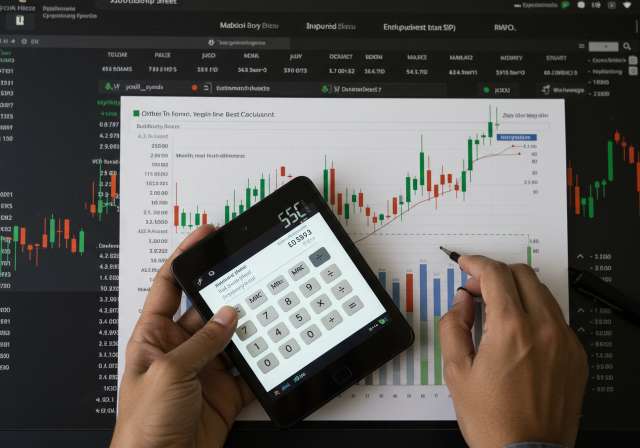
Navigate the complexities of F&O with ease! Discover the best options trading app for Indian investors, compare brokerage charges, features, and security. Maxim
Navigate the complexities of F&O with ease! Discover the best options trading app for Indian investors, compare brokerage charges, features, and security. Maximize your profit potential in the Indian market.
Mastering Options Trading: Choosing the Right App for Indian Investors
Understanding Options Trading in the Indian Market
Options trading, a subset of derivatives trading, has gained significant traction in the Indian equity markets. It allows investors to hedge their existing portfolios, speculate on price movements, or generate income. Before diving into the world of options trading apps, it’s crucial to understand the fundamentals. Options are contracts that give the buyer the right, but not the obligation, to buy (call option) or sell (put option) an underlying asset at a predetermined price (strike price) on or before a specified date (expiration date). The underlying assets can be anything from individual stocks listed on the NSE and BSE to indices like the Nifty 50 and Bank Nifty.
In India, options trading is regulated by SEBI, ensuring investor protection and market integrity. The exchange traded options are standardized contracts with clearly defined terms, mitigating counterparty risk. Investors can participate in options trading through various brokers, many of whom offer dedicated platforms for options trading.
Key Terminology for Options Trading:
- Call Option: Grants the buyer the right to buy the underlying asset at the strike price.
- Put Option: Grants the buyer the right to sell the underlying asset at the strike price.
- Strike Price: The price at which the underlying asset can be bought or sold.
- Expiration Date: The date on which the option contract expires.
- Premium: The price paid by the buyer to the seller for the option contract.
- Intrinsic Value: The profit that could be made if the option were exercised immediately.
- Time Value: The portion of the premium that reflects the time remaining until expiration.
- Open Interest: The total number of outstanding options contracts for a particular strike price and expiration date.
Why Use an Options Trading App?
Traditionally, options trading was conducted through desktop-based trading platforms. However, the advent of smartphones and high-speed internet has revolutionized the industry, leading to the proliferation of options trading apps. These apps offer several advantages:
- Convenience: Trade anytime, anywhere directly from your smartphone.
- Real-time Data: Access live market data, charts, and analysis tools.
- Order Placement: Quickly place buy and sell orders with various order types (market, limit, stop-loss).
- Portfolio Tracking: Monitor your options positions and track your profits and losses in real time.
- Alerts and Notifications: Receive alerts on price movements, order executions, and margin calls.
- Educational Resources: Access educational materials, tutorials, and market insights to improve your trading knowledge.
The best options trading app simplifies the complex world of derivatives, making it more accessible to both beginners and experienced traders.
Factors to Consider When Choosing an Options Trading App
Selecting the right options trading app is crucial for a successful and rewarding trading experience. Here are some key factors to consider:
1. Brokerage Charges and Fees:
Brokerage charges can significantly impact your profitability, especially if you are a frequent trader. Different brokers have varying fee structures. Some charge a flat fee per trade, while others charge a percentage of the transaction value. Compare the brokerage charges of different apps and choose one that aligns with your trading frequency and volume. Look for hidden charges such as DP charges, transaction fees, and account maintenance fees.
2. Platform Features and Functionality:
The platform’s features and functionality are critical for efficient and informed trading. Look for apps that offer:
- Real-time Market Data: Access to real-time prices, charts, and order book information.
- Advanced Charting Tools: A variety of technical indicators and charting tools to analyze price trends.
- Option Chain Analysis: A comprehensive option chain that displays all available strike prices and expiration dates.
- Strategy Builders: Tools to help you create and analyze different options trading strategies (e.g., covered calls, protective puts, straddles, strangles).
- Order Types: Support for various order types, including market orders, limit orders, stop-loss orders, and bracket orders.
- Customizable Interface: A customizable interface that allows you to personalize your trading experience.
3. Security and Reliability:
Security is paramount when it comes to financial transactions. Ensure that the app employs robust security measures to protect your account and personal information. Look for features such as:
- Two-Factor Authentication (2FA): Adds an extra layer of security to your account.
- Data Encryption: Encrypts your data to prevent unauthorized access.
- Regular Security Audits: Ensures that the app’s security measures are up to date.
Reliability is also crucial. The app should be stable and perform consistently, even during periods of high market volatility. Check user reviews and ratings to assess the app’s reliability.
4. User Interface and Experience:
The app should have a user-friendly and intuitive interface. It should be easy to navigate and understand, even for beginners. A well-designed interface can significantly improve your trading efficiency and reduce the risk of errors. Look for apps that offer:
- Clean and uncluttered design.
- Easy-to-understand charts and data.
- Simple order placement process.
- Responsive customer support.
5. Customer Support:
Responsive and helpful customer support is essential, especially if you are new to options trading. The app should offer multiple channels for customer support, such as phone, email, and chat. Test the customer support by asking questions and assessing their responsiveness and helpfulness.
6. Research and Analysis Tools:
Access to research and analysis tools can help you make more informed trading decisions. Look for apps that offer:
- Market news and analysis.
- Analyst recommendations.
- Company fundamentals.
- Economic data.
7. Margin Requirements:
Options trading involves margin requirements. Understand the margin requirements of the app and ensure that you have sufficient funds in your account to cover your margin obligations. Be aware of the risks of margin trading and the potential for significant losses.
Popular Options Trading Apps in India
Several options trading apps are available in the Indian market, each with its own strengths and weaknesses. Here are some popular options trading platforms:
- Zerodha Kite: Known for its low brokerage fees and user-friendly interface.
- Upstox Pro: Offers a wide range of features and tools, including advanced charting and options chain analysis.
- Groww: A popular app for beginners, offering a simple and intuitive interface.
- Angel One: A full-service broker with a comprehensive trading platform.
- ICICI Direct: A popular option for investors who prefer banking and trading in one place.
It’s essential to do your own research and compare different apps before making a decision. Consider your individual trading needs and preferences when choosing an app.
Risk Management in Options Trading
Options trading can be highly profitable, but it also involves significant risks. It’s crucial to have a solid risk management strategy in place before you start trading options. Here are some key risk management techniques:
- Set Stop-Loss Orders: Limit your potential losses by setting stop-loss orders.
- Diversify Your Portfolio: Don’t put all your eggs in one basket. Diversify your portfolio across different assets and strategies.
- Trade with a Plan: Develop a trading plan and stick to it. Don’t make impulsive decisions based on emotions.
- Manage Your Position Size: Don’t risk more than you can afford to lose on any single trade.
- Understand Option Greeks: Learn about the different option Greeks (Delta, Gamma, Theta, Vega) and how they affect option prices.
- Use Paper Trading: Practice options trading with a virtual account before risking real money.
Remember that past performance is not indicative of future results. Options trading involves the risk of loss, and you could lose your entire investment.
Tax Implications of Options Trading in India
Profits from options trading are subject to taxation in India. The tax treatment of options trading profits depends on whether you are considered a trader or an investor. If you are actively engaged in options trading, your profits will be treated as business income and taxed at your applicable income tax slab rate. If you are holding options for investment purposes, your profits will be treated as capital gains and taxed accordingly. Short-term capital gains (held for less than 36 months) are taxed at your applicable income tax slab rate, while long-term capital gains (held for more than 36 months) are taxed at a concessional rate of 10% (plus surcharge and cess). It’s advisable to consult with a tax advisor to understand the tax implications of options trading in your specific circumstances.
Conclusion: Making Informed Choices for Options Trading Success
Options trading offers exciting opportunities for Indian investors to generate income, hedge their portfolios, and profit from market movements. By carefully considering the factors discussed in this article and choosing the right options trading app, you can increase your chances of success in the Indian derivatives market. Remember to prioritize security, risk management, and continuous learning to navigate the complexities of options trading effectively. Whether you’re seasoned in equity markets or just starting with instruments like SIPs, ELSS, PPF, and NPS, understanding options can add another dimension to your investment strategy. Explore the functionalities of your chosen options trading app and consider starting with small investments to understand the nuances before committing larger sums.
Leave a Reply