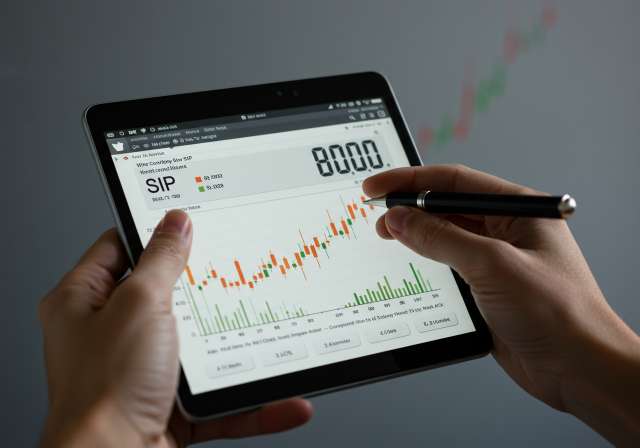
Thinking of opening a Demat account? Explore the world of stock market investing with options for a free demat a/c. Learn about brokerage charges, hidden fees,
Thinking of opening a Demat account? Explore the world of stock market investing with options for a free demat a/c. Learn about brokerage charges, hidden fees, and how to choose the best account for your investment journey in India.
Unlock the Indian Stock Market: Finding the Right Demat Account
What is a Demat Account and Why Do You Need One?
In the Indian stock market, a Demat account is essential for holding shares and other securities in electronic form. Think of it like a bank account, but instead of holding money, it holds your investments in shares, bonds, mutual fund units, and Exchange Traded Funds (ETFs). Before the advent of Demat accounts, shares were held physically, which involved cumbersome paperwork and significant risks of loss, theft, and forgery. The introduction of Demat accounts by the National Securities Depository Limited (NSDL) and Central Depository Services Limited (CDSL) revolutionized the Indian stock market, making trading more efficient and secure.
Without a Demat account, you cannot directly participate in the Indian equity markets through the National Stock Exchange (NSE) or the Bombay Stock Exchange (BSE). When you buy shares, they are credited to your Demat account; when you sell, they are debited from it. This electronic system has significantly reduced settlement times and simplified the trading process for investors across India.
Understanding the Costs Associated with Demat Accounts
While the idea of holding shares electronically is appealing, it’s crucial to understand the various costs associated with maintaining a Demat account. These costs can significantly impact your overall investment returns if not carefully considered. Here’s a breakdown of the key charges you should be aware of:
- Account Opening Charges: This is a one-time fee charged by the Depository Participant (DP) when you open a Demat account. Some DPs offer waivers on this charge as a promotional offer.
- Annual Maintenance Charges (AMC): This is a recurring fee charged annually to maintain your Demat account. AMC varies depending on the DP and the type of account you hold.
- Transaction Charges: These are levied on each debit transaction (selling shares) from your Demat account. Some DPs offer unlimited transaction plans for a fixed monthly or annual fee.
- Demat and Remat Charges: Dematerialization (Demat) refers to converting physical share certificates into electronic form, while rematerialization (Remat) is the reverse process. These services usually involve separate charges.
- Custodian Fees: Some DPs may charge custodian fees for holding your securities safely.
Are Truly “Free” Demat Accounts a Reality?
The term “free Demat account” often attracts new investors. However, it’s essential to understand what this typically entails. While some brokers may waive the account opening charges and even the first year’s AMC, it’s rare to find a completely free Demat account in the long run. Brokers offering seemingly free accounts often compensate through other charges, such as higher brokerage fees or hidden costs.
It’s crucial to carefully read the terms and conditions before opening a Demat account, paying close attention to all associated charges. Don’t be solely swayed by the “free” label. Instead, compare the overall cost-effectiveness of different Demat account options, considering your investment style and trading frequency.
Factors to Consider When Choosing a Demat Account
Selecting the right Demat account is a crucial step in your investment journey. Consider these factors to make an informed decision:
Brokerage Charges
Brokerage charges are the fees you pay to your broker for executing buy and sell orders. These can be percentage-based (a percentage of the transaction value) or flat-fee based (a fixed fee per transaction). Evaluate your trading frequency and investment volume to determine the most cost-effective brokerage plan.
Discount brokers typically offer lower brokerage rates compared to full-service brokers. However, full-service brokers provide additional services such as research reports, investment advisory, and dedicated relationship managers.
Account Maintenance Charges (AMC)
As mentioned earlier, AMC is a recurring fee for maintaining your Demat account. Compare AMC rates across different DPs and choose an account that aligns with your budget. Some DPs offer lifetime free AMC plans, which might be worth considering if you plan to be a long-term investor.
Trading Platform
The trading platform provided by your broker is your gateway to the stock market. It should be user-friendly, reliable, and equipped with the necessary tools for technical analysis, charting, and order placement. Many brokers offer mobile trading apps, allowing you to trade on the go.
Customer Support
Reliable customer support is essential for resolving any issues or queries you may encounter. Choose a broker with a responsive and helpful customer support team, available through multiple channels such as phone, email, and live chat.
Reputation and Reliability
Opt for a reputable and reliable DP that is registered with SEBI (Securities and Exchange Board of India). Check their track record, read online reviews, and ensure they have a strong presence in the Indian financial market. SEBI registration ensures they adhere to regulatory guidelines and protect investor interests.
Popular Investment Options You Can Hold in Your Demat Account
Your Demat account is not just for holding shares. You can also hold a wide range of other investment instruments, offering you diversification and flexibility:
- Equity Shares: These are the most common assets held in a Demat account, representing ownership in publicly listed companies.
- Mutual Funds: You can hold units of various mutual fund schemes, including equity funds, debt funds, and hybrid funds. Investing through a Demat account simplifies tracking and managing your mutual fund portfolio. You can also invest in ELSS (Equity Linked Savings Scheme) funds through your Demat for tax saving purposes under Section 80C of the Income Tax Act.
- Exchange Traded Funds (ETFs): ETFs are similar to mutual funds but are traded on stock exchanges like individual stocks. They offer diversification and liquidity.
- Bonds and Debentures: These are debt instruments issued by companies or governments to raise capital.
- Initial Public Offerings (IPOs): You can apply for IPOs through your Demat account.
- Sovereign Gold Bonds (SGBs): These are government-issued bonds linked to the price of gold, offering a safe and convenient way to invest in gold.
Opening a Demat Account: A Step-by-Step Guide
Opening a Demat account is a relatively straightforward process. Here’s a step-by-step guide:
- Choose a Depository Participant (DP): Select a DP based on the factors discussed above, such as brokerage charges, AMC, trading platform, and customer support.
- Fill out the Application Form: Obtain the Demat account opening form from the DP’s website or branch. Fill out the form accurately, providing all the required information.
- Submit KYC Documents: Submit Know Your Customer (KYC) documents, including proof of identity (e.g., PAN card, Aadhaar card) and proof of address (e.g., passport, utility bill).
- In-Person Verification (IPV): Some DPs require an in-person verification (IPV) to verify your identity. This can be done through video conferencing or by visiting the DP’s branch.
- Agreement and Account Activation: Once your application is approved, you will receive an agreement outlining the terms and conditions of the Demat account. After signing the agreement, your Demat account will be activated.
Maximizing Your Investment Potential Through Systematic Investment Plans (SIPs)
Once you have your Demat account set up, consider exploring Systematic Investment Plans (SIPs) as a disciplined approach to investing in mutual funds and ETFs. SIPs allow you to invest a fixed amount regularly, such as monthly or quarterly, regardless of market fluctuations. This strategy helps you average out your investment cost and potentially benefit from the power of compounding.
SIPs are a great option for beginners as they require a relatively small initial investment and promote long-term wealth creation. You can easily start a SIP through your Demat account, choosing the desired mutual fund scheme or ETF and setting up the investment frequency and amount.
Beyond Equities: Exploring Other Investment Avenues
While equities offer the potential for high returns, it’s important to diversify your investment portfolio across different asset classes to mitigate risk. Your Demat account can also be used to invest in other avenues, such as:
- Debt Instruments: These include bonds, debentures, and fixed deposits, offering relatively stable returns.
- Gold: You can invest in gold through Sovereign Gold Bonds (SGBs), gold ETFs, or physical gold.
- Real Estate Investment Trusts (REITs): REITs allow you to invest in income-generating real estate properties without directly owning them.
- National Pension System (NPS): While not directly held in the Demat account, NPS investments are linked to your Permanent Retirement Account Number (PRAN) and offer tax benefits. You can link your Demat to facilitate contributions.
- Public Provident Fund (PPF): Similar to NPS, PPF is a government-backed savings scheme offering tax benefits and fixed returns.
Staying Informed and Making Smart Investment Decisions
Investing in the stock market requires continuous learning and staying informed about market trends, company performance, and economic developments. Utilize the resources provided by your broker, such as research reports and market analysis, and supplement them with independent research from reputable sources. Remember to consult with a qualified financial advisor before making any significant investment decisions. Diversification, disciplined investing, and a long-term perspective are key to achieving your financial goals in the Indian stock market.
Leave a Reply