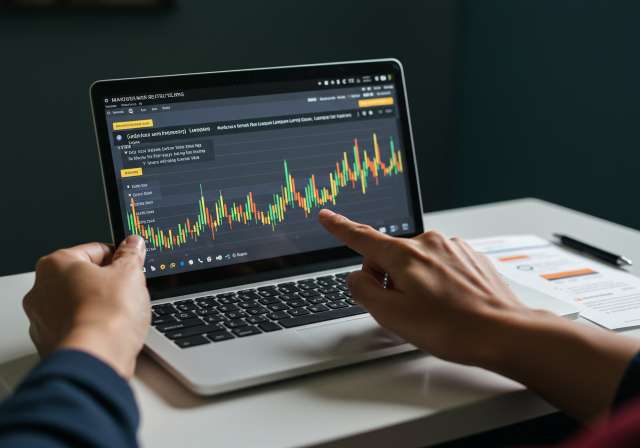
A well-defined trading plan is crucial for success. Your plan should include:
- Your trading goals: What are you hoping to achieve through intraday trading?
- Your risk tolerance: How much money are you willing to lose?
- Your trading strategies: Which strategies will you use?
- Your entry and exit rules: How will you decide when to enter and exit a trade?
- Your risk management rules: How will you manage your risk? (e.g., stop-loss orders, position sizing)
4. Start with a Small Amount of Capital
Begin with a small amount of capital that you can afford to lose. Avoid using borrowed money. Treat your initial trades as a learning experience. Focus on understanding the market dynamics and refining your trading strategies. Think of it as tuition money for your education in the markets.
5. Practice with Paper Trading
Before trading with real money, practice with paper trading (simulated trading). Most brokers offer paper trading platforms where you can trade with virtual money without risking any real capital. This allows you to test your strategies and get comfortable with the trading platform.
6. Choose the Right Stocks for Intraday Trading
Select stocks that are liquid (easily bought and sold) and volatile. Liquid stocks ensure that you can enter and exit your positions quickly. Volatility provides opportunities for price movements. Nifty 50 stocks are often a good starting point, but remember to do your own research.
7. Monitor the Market Closely
Intraday trading requires constant monitoring of the market. Stay updated on market news, economic data releases, and global events that could impact stock prices. Use a reliable trading platform with real-time data feeds and charting tools.
8. Discipline and Emotional Control
Intraday trading can be emotionally challenging. It’s important to remain disciplined and avoid impulsive decisions. Stick to your trading plan and don’t let emotions like fear and greed influence your trading. Emotional control is perhaps the most difficult, but the most crucial, skill to master.
Risks of Intraday Trading
Intraday trading is a high-risk activity and is not suitable for everyone. Here are some of the risks involved:
- High Leverage: Leverage can amplify both profits and losses. A small adverse price movement can wipe out your capital.
- Market Volatility: Sudden and unexpected market movements can lead to significant losses.
- Time Commitment: Intraday trading requires a significant time commitment to monitor the market and execute trades.
- Emotional Stress: The pressure of making quick decisions and the potential for losses can be emotionally stressful.
- Brokerage Costs: Frequent trading can result in high brokerage costs, which can eat into your profits.
Tax Implications of Intraday Trading in India
Profits from intraday trading are considered speculative business income and are taxed according to your income tax slab. You can also deduct expenses related to your trading activities, such as brokerage charges, internet costs, and subscription fees for trading platforms. Consult with a tax advisor to understand the tax implications of intraday trading and comply with all applicable tax laws.
Intraday Trading Tips for Beginners
Here are a few tips to help you succeed in intraday trading:
- Start Small: Begin with a small amount of capital and gradually increase your trading size as you gain experience and confidence.
- Use Stop-Loss Orders: Always use stop-loss orders to limit your losses.
- Focus on a Few Stocks: Don’t try to trade too many stocks at once. Focus on a few stocks that you understand well.
- Avoid Overtrading: Don’t trade just for the sake of trading. Wait for the right opportunities.
- Keep a Trading Journal: Record your trades, including your entry and exit points, your reasons for trading, and your results. This will help you identify your strengths and weaknesses and improve your trading performance.
- Stay Updated on Market News: Keep abreast of market news and economic events that could affect stock prices.
- Learn from Your Mistakes: Everyone makes mistakes in trading. The key is to learn from your mistakes and avoid repeating them.
Conclusion
Intraday trading can be a potentially profitable activity, but it requires significant knowledge, skill, discipline, and risk management. Before you start trading, make sure you understand the risks involved and are prepared to lose money. Start small, develop a trading plan, and continuously learn and improve your trading skills. Remember that the stock market is inherently risky, and there are no guarantees of profit. Consider exploring safer investment options like mutual funds, SIPs, ELSS, PPF, and NPS if you are risk-averse. Conduct thorough research and, if needed, consult with a financial advisor before making any investment decisions.
Demystifying intraday trading: Learn strategies, risks, and tips for navigating the Indian stock market. Discover how to potentially profit from daily market movements and manage your risk effectively. Master the art of intraday trading.
Intraday Trading: A Beginner’s Guide for the Indian Market
What is Intraday Trading?
Intraday trading, also known as day trading, is the practice of buying and selling financial instruments, such as stocks, currencies, or commodities, within the same trading day. The aim is to capitalize on small price movements that occur throughout the day and close all positions before the market closes. This means no positions are held overnight, eliminating overnight risk. In the Indian context, this typically refers to trading on exchanges like the National Stock Exchange (NSE) and the Bombay Stock Exchange (BSE).
Intraday Trading vs. Delivery Trading
A clear distinction exists between intraday trading and delivery-based trading (often simply called ‘delivery trading’). In delivery trading, you buy a stock with the intention of holding it for longer than a single day, sometimes for weeks, months, or even years. You take delivery of the shares in your Demat account. Conversely, in intraday trading, you square off (close) your position before the market closes, typically around 3:30 PM on the NSE and BSE. You are not concerned with the long-term fundamentals of the company; you are solely focused on short-term price fluctuations.
Key Concepts for Intraday Trading in India
Understanding these concepts is crucial before venturing into the world of intraday trading:
- Leverage: Brokers in India often provide leverage to intraday traders, allowing them to trade with more capital than they actually have in their account. While leverage can amplify profits, it also significantly magnifies losses. Be aware of the margin requirements set by your broker and SEBI guidelines.
- Stop-Loss Orders: A stop-loss order is an essential risk management tool. It automatically closes your position when the price reaches a pre-determined level, limiting potential losses. Setting a stop-loss is non-negotiable in intraday trading.
- Target Price: This is the price level at which you plan to exit your trade with a profit. Defining your target price beforehand helps you avoid greed and stick to your trading plan.
- Technical Analysis: Technical analysis involves studying charts, patterns, and indicators to predict future price movements. Intraday traders heavily rely on technical indicators like Moving Averages, Relative Strength Index (RSI), MACD, and Fibonacci retracements.
- Volatility: Intraday traders thrive on volatility. Higher volatility means greater price swings and more opportunities to profit (and lose). Keeping an eye on the India VIX (Volatility Index) can provide insights into overall market volatility.
- Order Types: Understand the different order types available, such as Market Orders, Limit Orders, and Stop-Loss Orders, and how they work in the context of intraday trading.
Strategies for Intraday Trading
Several strategies can be employed in intraday trading. Here are a few common ones:
- Breakout Trading: Identifying stocks that are breaking out of a trading range and entering a new trend.
- Momentum Trading: Capitalizing on stocks that are showing strong upward or downward momentum.
- Reversal Trading: Identifying potential reversals in the price trend and trading against the current trend.
- Scalping: Making very small profits from numerous trades throughout the day.
- Gap Trading: Trading based on the gaps between the previous day’s closing price and the current day’s opening price.
Steps to Get Started with Intraday Trading in India
Here’s a step-by-step guide to help you begin your journey with intraday trading:
1. Open a Demat and Trading Account
You’ll need a Demat (Dematerialized) account and a trading account with a SEBI-registered broker. Several brokers in India offer online trading platforms. Compare brokerage charges, platform features, and customer service before making a decision. Popular choices include Zerodha, Upstox, Angel One, and Groww.
2. Learn the Basics of the Stock Market
Before risking your capital, dedicate time to learning the fundamentals of the stock market. Understand how the NSE and BSE operate, the factors that influence stock prices, and the different types of financial instruments available. The Securities and Exchange Board of India (SEBI) offers investor education resources. Several online platforms and courses are also available.
Leave a Reply